Ireland as a Living Laboratory for Global Health Infrastructure
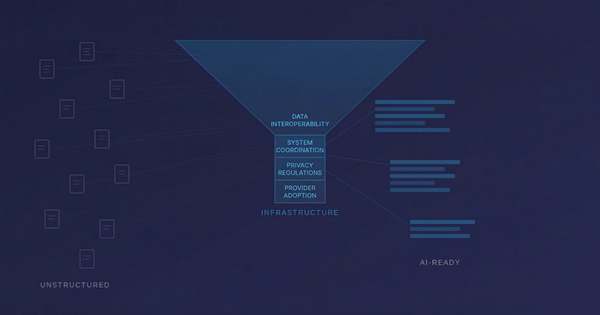
AI in healthcare will not be limited by algorithms. It will be limited by ground truth data. And very few countries have the infrastructure required to generate it.
By Robert Kelly, Founder & CEO, Heart Rhythm International
Artificial intelligence is moving rapidly into healthcare. New models promise earlier diagnosis, smarter triage, and predictive insights that were unthinkable a decade ago.
But beneath the momentum lies a quieter constraint.
AI in healthcare will not be limited by algorithms. It will be limited by ground truth data. And very few countries have the infrastructure required to generate it.
The missing layer in clinical AI
Most healthcare AI models are trained on retrospective datasets. Often single-centre. Frequently incomplete. Sometimes synthetic. They may be sufficient for research publication. They are not sufficient for regulatory-grade deployment.
Clinical AI requires something more demanding: structured longitudinal data, consistent governance, and traceable audit trails. In other words, real-world evidence embedded into day-to-day care.
The global conversation tends to focus on model performance. It should focus on system architecture.
Without infrastructure, intelligence remains theoretical.
Why smaller systems can move faster
In digital health, scale can be a constraint.
Large countries often operate across fragmented hospital networks, inconsistent data standards, and layered governance structures. Alignment becomes slow. Implementation becomes uneven.
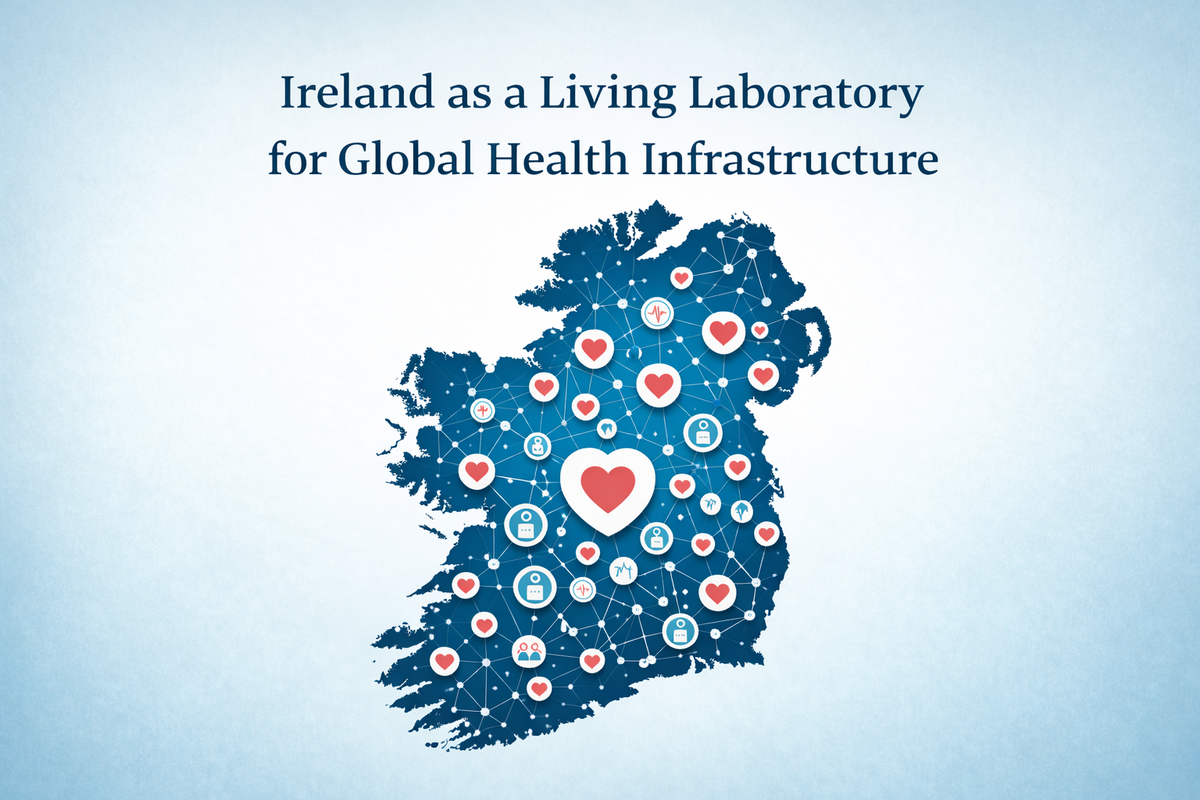
Ireland occupies a rare middle ground. Large enough to deploy nationally. Cohesive enough to align quickly.
In the cardiac sector, nearly half of national registry data now originates from private hospitals operating within a unified framework alongside public services. That level of cross-sector interoperability is unusual. It allows patients to be tracked longitudinally regardless of where they are treated.
This is structural alignment in practice.
From registry to living infrastructure
Historically, national registries were designed for oversight and reporting. Modern digital infrastructure must operate continuously.
A living infrastructure captures the lifecycle of care: procedures, follow-ups, device data, outcomes, governance, and auditability. It supports clinical decision-making and national accountability simultaneously.
Within Ireland's cardiac ecosystem, this foundation now includes close to one million structured follow-ups spanning more than 17 years, the ability to support automated detection of patients lost to follow-up, sovereign cloud deployment with full data residency, and a structured data environment designed to support the early development of predictive AI models in cardiovascular care.
This is no longer a static database. It is operational infrastructure.
Heart Rhythm International has contributed to this evolution by supporting national cardiac device traceability, longitudinal follow-up workflows, and real-time structured data capture across public and private settings.
The export question
There is a persistent assumption that innovation must originate in larger markets. In practice, scalable infrastructure often emerges in cohesive systems and then travels outward.
When a country can demonstrate structured longitudinal data, clear governance, cross-sector interoperability, and embedded clinical workflows, it becomes more than a domestic health system. It becomes a validation environment.
Ireland has the potential to position itself as a real-world proving ground for digital health technologies. For global manufacturers navigating the EU AI Act and Medical Device Regulation, the ability to validate within a structured, sovereign, operational setting is increasingly valuable.
Infrastructure before intelligence
The global discussion is currently centred on intelligence. The more urgent discussion is about infrastructure.
Without structured, longitudinal, well-governed data, AI remains impressive but fragile. With it, innovation becomes durable.
Countries that build trusted digital infrastructure will shape the next era of healthcare. Not because they develop the most advanced models, but because they create the conditions in which models can be safely deployed.
The future of healthcare will not be determined solely by who builds the most advanced algorithms.
It will be shaped by who builds the most trusted infrastructure.